Blog

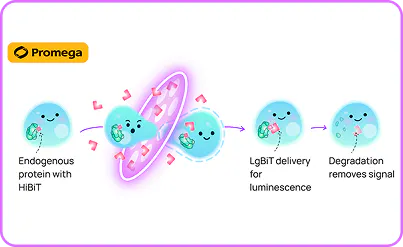
Live-Cell Protein Detection with LgBiT: How Mechanoporation Enables Intracellular Assays Without Lysis

Portal Bio's March 2026 newsletter is live, featuring five new experimental datasets across immune cell engineering, live-cell drug discovery assays, and high-throughput automated screening. Each experiment demonstrates a workflow that conventional electroporation and lipid nanoparticle methods cannot reliably replicate in primary immune cells.

March 2026 Research Highlights

Portal delivers circular RNA (circRNA) directly into cells, enabling protein expression lasting up to 10 days and simultaneous co-delivery of multiple constructs in a single step. In collaboration with Massachusetts General Hospital, circRNA-engineered CAR-T cells achieved 75+% dual positive co-expression of CD19 CAR and membrane-bound IL-12, with 95% tumor cell cytotoxicity at a 3:1 effector-to-target ratio.

Circular RNA Delivery to Primary T Cells: A Practical Guide to Extended Expression and Multiplexed Engineering Without Genomic Integration

Portal delivered GFP circular RNA (circRNA) and a fluorescent tracer into primary human neutrophils directly in unfractionated whole blood, with no upstream isolation step. Boosted samples reached ~50% GFP+ neutrophils the day after delivery and ~32% to ~44% dextran+ neutrophils the same day, while preserving the neutrophil population at ~95% of live cells post-boost.

Delivering Circular RNA to Neutrophils Directly from Whole Blood: A No-Isolation Workflow for Innate Immunity Research

Portal's mechanoporation delivered GFP mRNA into neuronal progenitor cells (NPCs) without viral vectors and without transfection chemistry, achieving 75%+ GFP-positive cells one day after a single processing step. A fluorescent tracer co-delivered alongside the mRNA reached 70%+ of live cells at the strongest condition, with viability preserved up to 80%+ post-boost. Neuronal progenitor cells (NPCs) are multipotent precursor cells that give rise to neurons and glia. They are widely used as an iPSC-derived model for neurodevelopment, neurodegenerative disease, and CNS-directed therapeutics, and they have historically been one of the hardest mammalian cell types to engineer without viral vectors.

Non-Viral mRNA Delivery to Neuronal Progenitor Cells: A Practical Guide to High-Efficiency Delivery Without Viruses or Lipid Nanoparticles